Days
Hours
Minutes
Seconds

overview

As healthcare systems face mounting capacity constraints, workforce shortages and pressure to deliver more patient-centered care, hospital-at-home programs have emerged as a transformative solution that delivers acute-level care in patients’ homes with outcomes that often exceed traditional hospital settings. Leading health systems are achieving 30-day readmission rates as low as 6-9% compared to 15-23% for traditional inpatient care, while simultaneously improving patient satisfaction scores, reducing costs and creating much-needed hospital capacity.


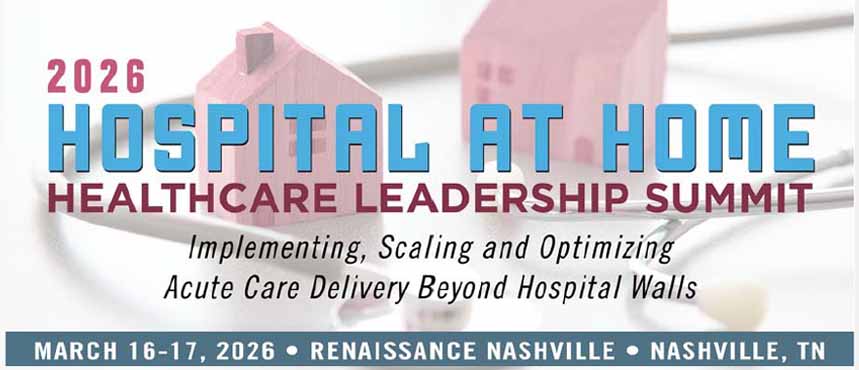
Business Research Intelligence Network presents the Hospital at Home Healthcare Leadership Summit, bringing together healthcare executives, clinical leaders and operational experts to explore proven strategies for launching, scaling and optimizing hospital-at-home programs that deliver measurable clinical, financial and patient experience outcomes.


The summit aims to equip healthcare organizations with the knowledge and tools needed to develop robust hospital-at-home programs that improve patient outcomes, enhance operational efficiency and drive financial sustainability. Our speakers will share practical strategies for overcoming common implementation challenges, optimizing clinical operations and measuring program success. Join us as we chart the course for the future of healthcare delivery beyond traditional hospital settings and explore innovative approaches to meeting the growing demand for home-based acute care services. This is an essential event for healthcare leaders who are serious about developing or expanding their hospital-at-home capabilities and staying ahead of industry trends.

Agenda

7:15am – 8:00am
Conference Registration & Networking Breakfast

8:10am – 8:50am
Clinical Models and Care Delivery Approaches: From Rapid Launch to Mature Programs
Hospital-at-home programs vary widely in structure, from hybrid models combining twice-daily in-home nursing or paramedic visits with virtual provider check-ins to more technology-intensive approaches relying heavily on remote monitoring and telehealth. Learn how to determine optimal visit frequency, structure clinical teams, provide access to labs, imaging, pharmacy and specialty consults in home settings, and decide what services to provide directly versus through partnerships with home health agencies, community paramedicine programs and technology vendors.

Lindsay Williams, PhD, RN, NEA-BC, PHN, PMP
Director, Clinical Operations
Cedars-Sinai at Home 

8:50am – 9:30am
Staffing Models and Workforce Development
Building high-performing hospital-at-home teams requires thoughtful workforce strategies that address unique challenges including travel time between patients, working independently in home settings, managing unpredictable schedules and maintaining clinical competencies across diverse acute conditions. This session explores staffing approaches including use of registered nurses, paramedics with specialized training, advanced practice providers, social workers and community health workers, along with optimal team structures, scheduling models and ratios. Learn strategies for recruiting and retaining qualified staff, providing training and ongoing competency assessment, supporting staff safety in community settings, maintaining morale and preventing burnout, and compensating teams appropriately given the demands of home-based acute care delivery.

Teresa Thacker BSN, MBHA
Clinical Manager / Advanced Care at Home
UNC Health

9:30am – 10:00am
Networking & Refreshments Break

10:00am – 10:40am
Patient Selection, Clinical Protocols and Safety Management
Successful hospital-at-home programs require rigorous patient selection criteria, evidence-based clinical protocols and comprehensive safety management systems to ensure appropriate care and minimize risk. This session explores eligibility criteria that balance clinical appropriateness with operational feasibility, including assessment of home environment safety, caregiver availability, technology access and patient willingness to participate. Learn protocols for managing common acute conditions and select post-surgical patients, along with strategies for early recognition of clinical deterioration, emergency response procedures, medication management in home settings and coordination with emergency medical services when escalation of care is required.

Adrian Carrola, DNP, RN, VA-BC
Director of Patient Care Services
Hospital at Home
Vascular Access Team
University Health    

10:40am – 11:20am
Sponsored Session

11:20am – 12:00pm
Clinical Innovation and Program Expansion Strategies
Explore emerging trends for expanding hospital at home services beyond traditional acute care models, including adding new service lines, incorporating specialty care and integrating with other home-based programs.

Jared Huber, MD
Medical Director of Home-Based Care
University of Utah Health 

12:00pm – 12:40pm
The Missing Pillar of Hospital at Home: Integrating a Proven Caregiver Support Model to Reduce Admissions, Enhance Outcomes, and Strengthen Equity
Hospital‑at‑Home (HaH) programs are transforming acute care delivery by shifting high‑acuity services into the home, yet most models overlook a foundational factor that directly influences safety, readmission risk, adherence, and patient experience: the family caregiver.

Duke Health has built one of the nation’s most robust, data‑driven caregiver‑support infrastructures fully integrated into our EHR/EMR (Epic). What we have learned is clear: caregiver capability is often the determining factor in whether a patient remains safely at home.

Our session will demonstrate why caregiver support must be intentionally designed into Hospital‑at‑Home models and how doing so delivers measurable improvements in clinical, financial, operational, and equity outcomes.

Nicole Clagett, BSW
Director
Duke Caregiver Support & Community Development

Cooper Linton, MSHA, MBA
Associate Vice President/Entity Leader
Duke HomeCare & Hospice 

12:40pm – 1:40pm
Luncheon

1:40pm – 2:20pm
Scaling Hospital at Home: From Pilot to Enterprise Program
Moving beyond successful pilots to scaled programs that serve significant patient volumes across multiple sites requires attention to standardization, quality consistency, technology infrastructure, operational efficiency and sustainable financial performance. This session examines strategies for expanding from single-site pilots to multi-hospital programs, determining optimal service area sizes and patient volume targets, building centralized versus distributed operational models, standardizing protocols and technology while allowing site-specific adaptation, training staff at new locations, maintaining culture and quality during rapid growth, and making data-driven decisions about where and how to expand.

Julia Jeter
Vice President, Enterprise Hospital at Home
Advocate Health 

2:20pm – 3:20pm
Panel: Achieving Clinical Quality and Safety Outcomes That Exceed Hospital Performance
Hospital-at-home programs must demonstrate not only comparable safety to hospital care but measurable improvements in outcomes to justify investment and earn clinician confidence. This panel brings together clinical leaders whose programs have achieved impressive results including lower readmission rates, zero or near-zero medication errors, fewer hospital-acquired conditions and higher patient satisfaction scores. This session will explore quality and safety metrics that matter most, strategies for maintaining clinical excellence while scaling rapidly, approaches for managing complications and adverse events when they occur, methods for transparent reporting and continuous improvement, and tactics for overcoming initial physician skepticism about home-based acute care safety.

Panelists:
Wendelyn Bosch, MD
Medical Director, Advanced Care at Home Command Center
Mayo Clinic 

Alexander R. Levit, MD
Medical Director – Hospital at Home
LPG Hospitalists

Lee Health System, Inc.

Jared Huber, MD
Medical Director of Home-Based Care
University of Utah Health 

3:20pm – 3:50pm
Networking & Refreshments Break

3:50pm – 4:30pm
Strategies When Hospital At Home Programs Are Not Available
In the Chicagoland Area, hospital systems are overwhelmed and bursting at the seams. Emergency Room wait times are 8 - 12 hours before patients see a doctor. ICU patients are holding in ERs for 1-2 days before being transferred to an appropriate ICU bed. Medical/Surgical and Telemetry patients are spending their entire admissions in the ER.

A true Hospital at Home Program brings acute, hospital-level care into a patient's home using remote monitoring, telehealth and in-person visits from nurses and doctors for conditions such as pneumonia, heart failure, infections and COPD. A few requirements for eligibility include the following:

  • Patients must need acute care but be stable enough to remain at home and have supportive caregivers willing to assist.
  • The care team provides daily in-person nursing visits, daily physician visits (often virtually), remote monitoring, lab draws and often mobile imaging.

Despite the dire need for a Hospital at Home program in Chicago and the surrounding suburbs, this phenomenon has yet to materialize, likely due to staffing challenges, patients not having supportive family members willing to remain with the patient and other challenges. As a result, patients are hospitalized for exacerbations of chronic conditions and discharged from the hospital earlier due to insurance mandates and denials leaving patients vulnerable and readmissions inevitable.

Heroes Home Health has successfully integrated the following services for our home health patients:

  • Visiting Physician Groups who will see patients within 48 hours of discharge from the hospital.
  • Visiting Wound Care Providers who will provide wound care orders and follow the patients weekly.
  • Visiting Laboratory Services.
  • Pharmacy services to delivery medications to the patients home (free of charge).

These services allow hospitals to discharge patients safely, decrease the risk of readmissions, guarantee post-discharge follow up and prevent serous safety events from occurring due to premature discharges (due to insurance denials).

Heroes Home Health has also partnered with the City of Chicago's Department of Aging to assist in obtaining homemaker services more expeditiously and provide a one-time monetary gift for medical supplies or equipment not covered by their insurance.

Heroes Home Heath's Statistics on Preventing Unplanned Hospital Care:

  • How often patients remained in the community after discharge from home health: 81.6% (National Average 77.7%)
  • How often patients were re-admitted to the hospital for a potentially-preventable condition after discharge from home health: 4.5% (National Average 4.1%)
  • How often patients were admitted to the hospital for a potentially preventable condition while receiving home health care: 10.7% (National Average 10.8%)

The presentation will discuss how these partnerships were started, integrated, and successful. As well as obstacles and strategies for success.

Tricia E. McVicker, JD, RN, BSN
Director of Nursing/In-House Counsel 
Heroes Home Health                 

4:30pm – 5:10pm
Legislative and Regulatory Strategy and Opportunities in the Hospital-at-Home Waiver Program

As the Hospital-at-Home model continues to demonstrate its value, its long-term success (and permanence) will depend on sustained legislative support and strong understanding at both the Congressional and regulatory levels. This discussion will explore how stakeholders can effectively navigate the complex policy and political landscape, communicate the program’s impact in meetings with policymakers, and address the key legislative and regulatory issues that must be resolved to achieve permanent status. We will also examine strategic considerations for expanding the program and identifying opportunities to refine and enhance the waiver to support broader adoption and long-term sustainability.

John Learn
Government Relations Manager
BayCare Health System

5:10pm
End of Day One

7:15am – 8:00am
Networking Breakfast

8:00am – 8:15am
Chairperson's Remarks

8:15am – 9:00am
Care Transitions and Post-Acute Coordination
Effective hospital-at-home programs require seamless transitions both into the program from emergency departments and direct admissions, and out of the program to ongoing care including primary care follow-up, specialty care, home health services and occasionally skilled nursing facilities. This session explores admission processes and criteria, emergency department protocols for identifying appropriate candidates, patient and family education during enrollment, warm handoffs to primary care providers upon discharge, medication reconciliation and pharmacy coordination, arrangement of needed durable medical equipment and home modifications, and strategies for ensuring appropriate follow-up care that prevents readmissions.

Jennifer T. Szakaly, MA, CMC, NMG
Founder & CEO
National Certified Care Manager & National Master Guardian
Caregiving Corner
Aging Life Care Association® Board of Directors

9:00am – 9:45am
Regulatory Compliance, Accreditation and Quality Reporting
Hospital-at-home programs must navigate complex regulatory requirements including Medicare conditions of participation, state licensure rules, accreditation standards and quality reporting obligations that were designed for traditional hospital settings. This session examines the CMS acute hospital care at home waiver program and its requirements, state-level regulations that may vary significantly, The Joint Commission and other accreditation considerations, quality measure reporting including outcomes, readmissions and patient experience metrics, and documentation requirements that satisfy both regulatory and reimbursement needs. Learn from an organization that has successfully achieved and maintained compliance, addressed surveyor questions about safety and quality, and worked with regulators to adapt requirements appropriately for home-based acute care settings.

Kimberly R. Smoak, MSH, QIDP
Deputy Secretary
State Survey Agency Director
Division of Health Quality Assurance
Florida Agency for Health Care Administration

9:45am – 10:15am
Networking & Refreshments Break

10:15am – 11:00am
Overcoming Implementation Challenges and Lessons Learned
Every hospital-at-home program encounters obstacles during implementation and scaling including physician skepticism about safety, operational inefficiencies that threaten financial viability, technology failures that disrupt care delivery, staffing shortages and retention challenges, payer resistance and inadequate reimbursement, and unanticipated clinical scenarios that expose gaps in protocols. This session features a leader who has navigated these challenges and emerged with a thriving program serving thousands of patients. The speaker will share candid stories about what went wrong and how they recovered, decision points where they considered shutting down the program, pivots that proved essential to success, and advice they wish they had received before launching. The discussion will address how to maintain momentum during difficult early stages and build organizational resilience to weather inevitable setbacks.

Wendelyn Bosch, MD
Medical Director, Advanced Care at Home Command Center
Mayo Clinic

11:00am – 11:45am
Home-Based Palliative Care: Benefits, Barriers and Access
Home-Based Palliative Care (HBPC) has emerged as a crucial component in the continuum of care for individuals with advancing illnesses. The primary objective of HBPC is to improve the quality of life for patients facing chronic and/or life-limiting illnesses while providing support for their families and friends in the familiar and comforting environment of their own home. Numerous studies have demonstrated the effectiveness of HBPC in achieving this goal through various outcome measures, including symptom management, patient and family satisfaction, and cost-effectiveness. By providing comprehensive symptom assessment and management by interdisciplinary teams, HBPC ensures that patients receive tailored interventions to alleviate distressing symptoms such as pain, dyspnea, and fatigue. This proactive approach not only enhances symptom relief but also empowers patients to maintain a sense of control over their care, thereby improving their overall well-being. Unfortunately, barriers to HBPC present significant challenges in delivering optimal care to palliative care patients. Barriers such as geographical limitations, healthcare infrastructure disparities, financial constraints and caregiver burden contribute to challenges in maintaining HBPC services at home. Addressing the benefits and barriers is essential to ensure equitable access to high-quality Home-Based Palliative Care.

Kristine Kowalski, RN, BSN, MBA, PHN, MA, CHPCA
Palliative Care Coordinator
Providence- Mission Hospital

11:45am – 12:30pm
The Home-Centered Care Continuum: Advancing Aging in Place with Medical Innovation
As the U.S. population ages and healthcare systems face mounting pressure to deliver high-quality, cost-effective care, the home is emerging as a critical site of care delivery. This presentation explores the evolving landscape of home-based medical care (HBMC) and its pivotal role in enabling aging in place—a model that aligns with patient preferences, improves outcomes, and reduces avoidable institutionalization.

Drawing on real-world experience in hospital-at-home, hospice, and advanced illness care, this session presents a comprehensive care continuum that spans from preventive and primary care to acute, palliative, and end-of-life services—all delivered in the home. We will examine the clinical, operational, and policy frameworks that support this model, including interdisciplinary team structures, technology integration, and value-based payment strategies.

Attendees will gain insights into:

  • The core components of a scalable home-based care model
  • How to align incentives across payers, providers, and caregivers
  • The role of Medicare Advantage and advance payment models in accelerating adoption

Ultimately, this session will challenge traditional assumptions about where care should happen and offer a vision for a home-centered healthcare ecosystem that supports dignity, independence, and quality of life for older adults.

Jatin Dave, MBBS, MPH, FACP
Chief Medical Officer, Government Products
UPMC Health Plan

12:30pm
Conference Concludes

12:45pm – 2:45pm
Designing the Technology Ecosystem for Scalable Virtual Care
Effective virtual care programs require a sophisticated, resilient technology ecosystem including remote patient monitoring, virtual care, mobile diagnostics, EHR integration, care coordination software, and command centers that provide continuous real‑time oversight and support to field teams. This session explores key technology design considerations spanning vendor selection, integration with existing hospital IT systems, and strategies to ensure reliable connectivity across diverse home environments. It also addresses best practices for staffing and training care teams and patients to effectively use technology in support of high‑quality outcomes, operational efficiency, and patient safety at scale. Finally, the session outlines practical methods for evaluating return on investment and demonstrating the measurable value virtual care programs deliver to clinical, operational, and financial performance.

Sana Sweis
Senior Director, Healthcare Digital Transformation
Huron Consulting Group

Elizabeth Brewster
Principle, Healthcare Clinical Transformation
Huron Consulting Group

Who Should Attend:
From Hospitals/Health Systems/Health Plans/Home Care
• Chief Medical Officer
• Chief Operating Officer
• Nursing Director
• Chief Transformation Officer
• Information Technology
• Home Hospital
• Physicians
• Clinical
• Operations Director
• Population Health
• Innovation
• Telehealth
• Remote Patient
• Acute Care
• Geriatric Care
• Patient Experience
• Diagnostic Services
• Human Resources
• Transformation
• Innovation
• Healthcare Payers

Also of interest to Vendors/Consultants/Service Providers

Sponsors & Exhibitors

Featured Speakers

Lindsay Williams

Director, Clinical Operations

Cedars-Sinai at Home

Teresa Thacker

Clinical Manager / Advanced Care at Home

UNC Health

Adrian Carrola

Director of Patient Care Services Hospital at Home Vascular Access Team

University Health

Jared Huber

Medical Director of Home-Based Care

University of Utah Health

Nicole Clagett

Director

Duke Caregiver Support & Community Development

Cooper Linton

Associate Vice President/Entity Leader

Duke HomeCare & Hospice

Julia Jeter

Vice President, Enterprise Hospital at Home

Advocate Health

Kimberly R. Smoak

Deputy Secretary State Survey Agency Director Division of Health Quality Assurance

Florida Agency for Health Care Administration

Wendelyn Bosch

Medical Director, Advanced Care at Home Command Center

Mayo Clinic

Alexander R. Levit

Medical Director – Hospital at Home LPG Hospitalists

Lee Health System, Inc.

Tricia E. McVicker

Director of Nursing/In-House Counsel

Heroes Home Health

John Learn

Government Relations Manager

BayCare Health System

Jennifer T. Szakaly

Founder & CEO National Certified Care Manager & National Master Guardian

Caregiving Corner Aging Life Care Association® Board of Directors

Kristine Kowalski

Palliative Care Coordinator

Providence- Mission Hospital

Jatin Dave

Chief Medical Officer, Government Products

UPMC Health Plan

Sana Sweis

Senior Director, Healthcare Digital Transformation

Huron Consulting Group

Elizabeth Brewster

Principle, Healthcare Clinical Transformation

Huron Consulting Group

Venue

Renaissance Nashville Hotel
611 Commerce Street
Nashville, TN 37203
615-255-8400

Mention BRI Network to get the Discounted Rate of $319/night